UK inflation accelerated more than expected in September 2026, adding to the Bank of England's monetary policy challenge as higher energy costs spread through the economy.
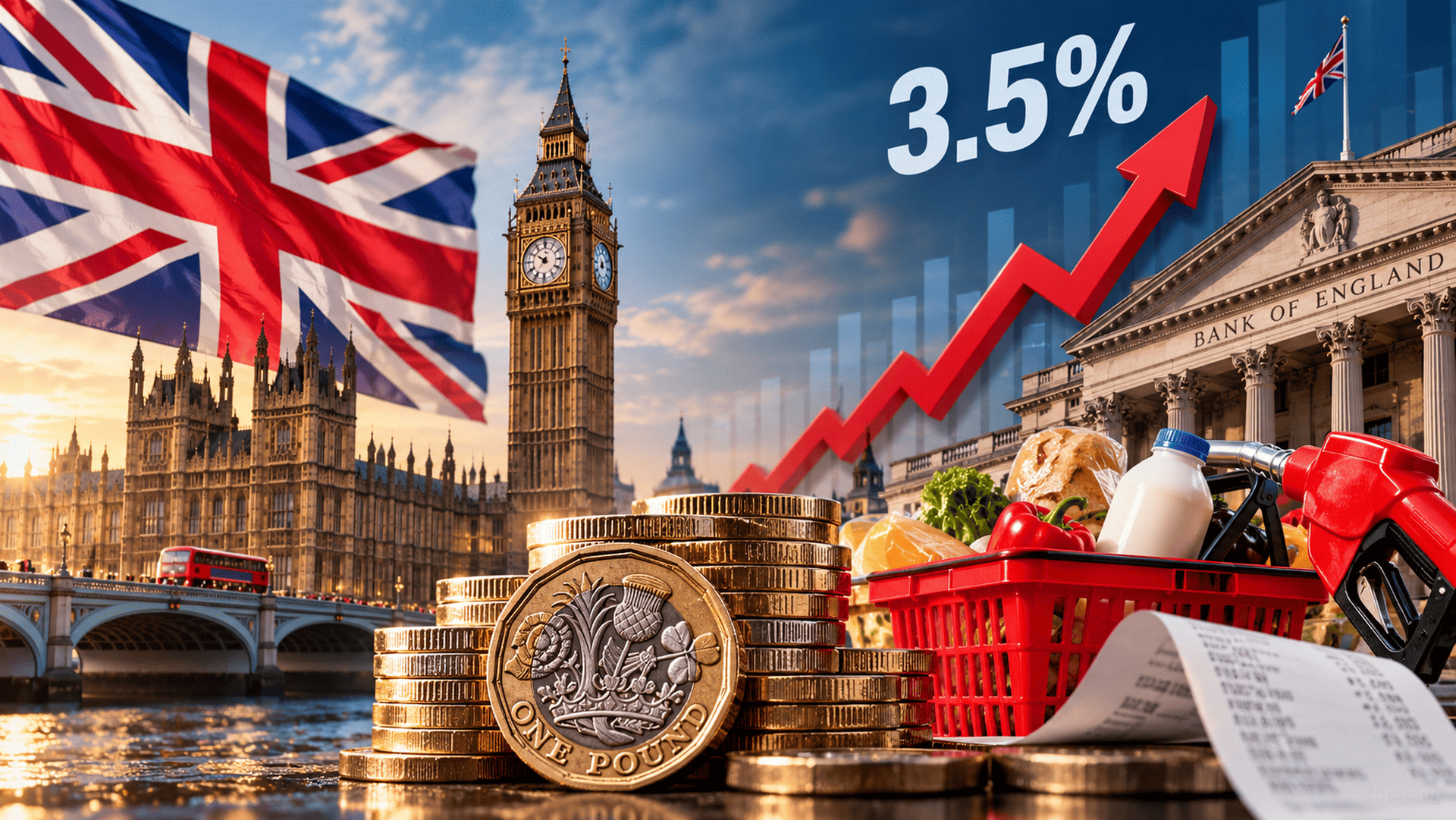
Annual consumer price inflation reached 3.5%, up from 3.1% in August and above the 3.4% market forecast. The reading marked the highest annual rate since October 2025 and moved inflation further away from the central bank's 2% target.
The immediate surprise was relatively modest at 0.1 percentage point. The more important development was the acceleration in underlying inflation.
Energy Prices Are Not the Only Concern
Rising petrol and diesel prices were the largest contributors to the increase in annual inflation, reflecting the impact of disruptions to global energy supplies.
However, the underlying figures suggest that inflationary pressures are not confined to fuel.
Core CPI, which excludes energy, food, alcohol and tobacco, increased to 2.8% from 2.6%. Services inflation climbed to 3.7% from 3.4%, an important development because the Bank of England closely monitors domestic price pressures when assessing monetary policy.
The simultaneous acceleration in headline, core and services inflation strengthens the argument that price pressures could prove more persistent than a temporary energy shock.
Nevertheless, higher energy costs can also weaken household purchasing power and economic activity, creating a difficult balance between controlling inflation and protecting growth.
What Does This Mean for GBP/USD?
Bullish sterling scenario: GBP/USD could find support if investors increase expectations of Bank of England interest-rate hikes, particularly if UK bond yields rise relative to US yields.
Bearish sterling scenario: The pound could weaken if elevated inflation damages UK growth expectations, increases fiscal concerns or coincides with a stronger US dollar.
Neutral scenario: The currency pair could consolidate if tighter UK policy expectations are offset by rising US Treasury yields and broader risk aversion.
The inflation surprise does not independently establish a sustainable sterling rally.
What Matters Next
The UK government's October 28 Budget and the Bank of England's November 5 monetary policy decision are important upcoming catalysts.
Markets will also monitor energy prices, wage growth, services inflation and the next CPI release scheduled for November 18.
EWM Trader Takeaway
The UK's inflation problem has become more complicated. Higher fuel prices explain much of the headline acceleration, but rising core and services inflation reinforce concerns about persistence.
For GBP/USD, the critical question is whether tighter Bank of England expectations can outweigh weaker growth prospects and movements in US yields.